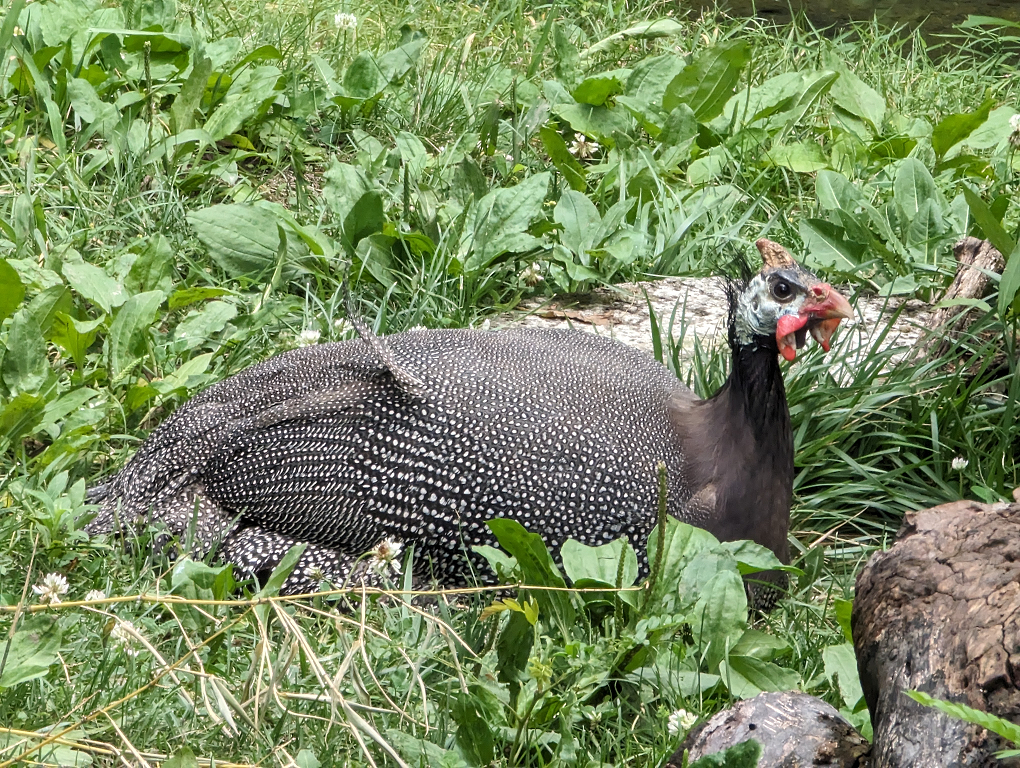
It’s a turkey! Look at that chicken!
Quite common misperceptions about this little bird. I’ve lost count of how many times someone has looked at our guinea fowl in our walkthrough aviary and called it a chicken or a turkey. This spotted bird lives in Africa. They’re very chicken-like with the scratching and pecking they do on the ground as they try to find food, but their coloration is very unique with their spotted bodies and colorful heads.
The guinea fowl are doing pretty good population wise and are often considered a nuisance in some areas of Africa. From my own experience at the zoo, they can be pretty loud when they want to be.
Guinea fowl are social birds with flocks of 15 to 40 in the wild. Though not migratory, they’ll spend most of their day walking and looking for food. Some flocks are known to follow fruit eating monkeys. They like to eat insects, seeds, and grapes. Though they prefer grasslands, guinea fowl can adapt to any habitat. Like chickens, they’ll nest in trees at night to avoid predators. Males and females can be told apart by their calls. Females typically have a more higher sounding call while the males will be more scratchy sounding. Dominate males run the flock and these males are typically the ones with the greatest endurance. When they mate, they mate for life.
Guinea fowl hide their eggs in thick grasses, sticks, and feathers. The eggs are a bit smaller than your normal chicken egg and their shells are harder. A hen can lay 7-30 eggs that all hatch around the same time. The father will protect the eggs and teach the young what to eat when they hatch. Baby guinea fowl are called “keets.” They have a life expectancy of 10-15 years.
Guinea fowl contribute to the world by eating a lot of insects–especially ticks and grasshoppers. Guinea fowl also help break down dung upon the plains of Africa by eating the insects on it. They serve as a food for several other species out there: hawks, leopards, owls, eagles, dogs, crocodiles, and snakes, just to name a few.
They’ve received the name “helmeted” because of the featherless crest–which is mostly cartilage–on the top of their heads. It’s larger in males than it is in females.
You can own them as pets. They make good ‘alarm dogs’ and can eat insects around your home, but they’re not very cuddly.
I hope when you see this bird at your local zoo, you don’t mistake them for chickens or turkeys. They’re really cool birds when you get to know them.
In honor of Mudbug, the helmeted guinea fowl.
 nikki diekemper