Get to Know You

This week, I’ve been going through a list of questions I need to be able to answer for a meeting I have tomorrow. I got these questions from my coworkers who answered them in their meetings. I’m so thankful they gave them to me, because I’m not good at coming up with answers on the spot. I’m a writer, not a speaker. Since I have to answer these questions, I thought it would be good to share them with you. I’m not going to share my answers since it’ll spoil my meeting for tomorrow, but this will allow you to think of your own answers and get to know you a little more.

  1. What’s on your mind?
  2. How do you like to receive feedback?
  3. How do you like to receive praise?
  4. What management style do you like? What style do you not like?
  5. What growth have you seen from your team since the time you started with them?
  6. How do you get along with others?
  7. What way can we improve?
  8. What makes you shut down?
  9. What’s your motivation?
  10. What feedback to you have that you want to share?

Helmeted Guinea Fowl

It’s a turkey! Look at that chicken!

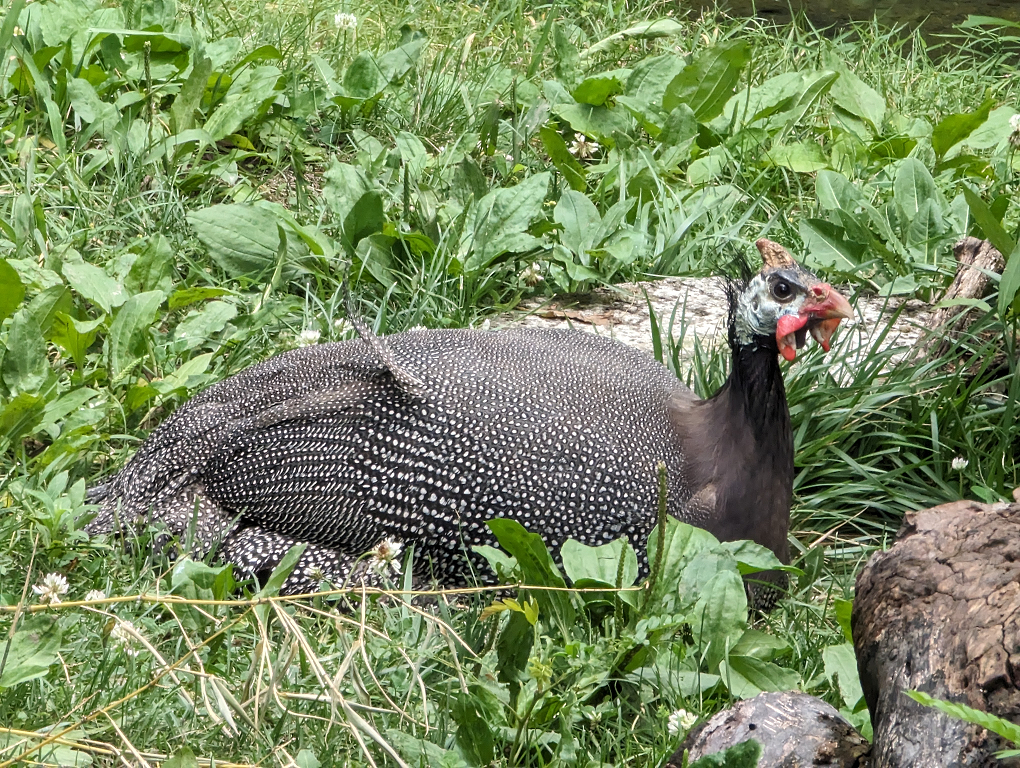
Quite common misperceptions about this little bird. I’ve lost count of how many times someone has looked at our guinea fowl in our walkthrough aviary and called it a chicken or a turkey. This spotted bird lives in Africa. They’re very chicken-like with the scratching and pecking they do on the ground as they try to find food, but their coloration is very unique with their spotted bodies and colorful heads.

The guinea fowl are doing pretty good population wise and are often considered a nuisance in some areas of Africa. From my own experience at the zoo, they can be pretty loud when they want to be.

Guinea fowl are social birds with flocks of 15 to 40 in the wild. Though not migratory, they’ll spend most of their day walking and looking for food. Some flocks are known to follow fruit eating monkeys. They like to eat insects, seeds, and grapes. Though they prefer grasslands, guinea fowl can adapt to any habitat. Like chickens, they’ll nest in trees at night to avoid predators. Males and females can be told apart by their calls. Females typically have a more higher sounding call while the males will be more scratchy sounding. Dominate males run the flock and these males are typically the ones with the greatest endurance. When they mate, they mate for life.

Guinea fowl hide their eggs in thick grasses, sticks, and feathers. The eggs are a bit smaller than your normal chicken egg and their shells are harder. A hen can lay 7-30 eggs that all hatch around the same time. The father will protect the eggs and teach the young what to eat when they hatch. Baby guinea fowl are called “keets.” They have a life expectancy of 10-15 years.

Guinea fowl contribute to the world by eating a lot of insects–especially ticks and grasshoppers. Guinea fowl also help break down dung upon the plains of Africa by eating the insects on it. They serve as a food for several other species out there: hawks, leopards, owls, eagles, dogs, crocodiles, and snakes, just to name a few.

They’ve received the name “helmeted” because of the featherless crest–which is mostly cartilage–on the top of their heads. It’s larger in males than it is in females.

You can own them as pets. They make good ‘alarm dogs’ and can eat insects around your home, but they’re not very cuddly.

I hope when you see this bird at your local zoo, you don’t mistake them for chickens or turkeys. They’re really cool birds when you get to know them.

In honor of Mudbug, the helmeted guinea fowl.

Passion

What is passion?

What makes you smile?

What just feels right?

When you’ve been at it for a while?

Is there a place, a career, a thought or two

That makes you feel like you?

Call it a purpose, call it a dream

Call it a calling, but whatever it may be

I hope it makes you smile

At the end of each day

I hope you feel you did something

Helped the world, in a way

I hope you know your passion

Whatever it may be

Is enough to make you qualified

And not the fraud you think people see

A calling. A passion

A dream or more

I hope you keep at it

And see how high you soar

Someday

How do you talk yourself up
When you’ve got nothing to say?
How do you boost yourself
When you’re sinking the other way?

Do you take a step back?
Think “maybe not today”
Do you power through?
And pray it will be okay?

How do you defy your feelings
When they’re leading you astray?
How do “buck up”
When you feel your on the fray?

When you think there’s so much on your plate
You want to throw away the tray
When projects don’t get done
On your shoulders does it weigh

Read this, write that
Study everyday
Do this, go there
It’s freedom that you crave

But take heart and don’t give up
You’ll see results someday
Take a minute to rest a while
Your dreams will pay the way

Keep Hope Alive

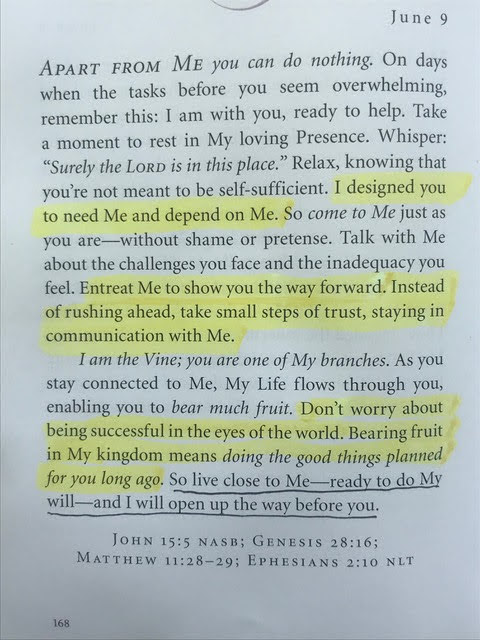
Back in 2021 I had the opportunity to interview Christian author Julie Lessman. She gave me a lot of good advice and I even shared it in a blog post here. After our meeting, she sent me an email full of good resources and advice. Along with it, she sent me an image from her devotional she felt was meant for me. I threw it in my story folder on my phone as a reminder. This is the image:

That was back in 2021. I looked at it a couple times to serve as a reminder that I need help writing my novels. I mean, I went to school for Animal Science, not Creative Writing. Everything I’ve learned, I’ve learned from others or research I’ve done on my own. So, writing a novel is a tall order, but it’s also my passion.

I’ve had a good week in writing recently. Pitched two agents who are interested in my current novel, broke free from writers block in my sequel, and–to top it off–my editor got my current novel back to me with all his feedback. He said he really enjoyed my story and felt my characters were likeable (even the villains)! Plus, he said my main character was easy to be sympathetic toward. All huge victories for a novel.

Then, I got into the edits.

There’s a lot of simple line stuff, and I always forget to put action before dialogue. A lot of easy fixes and he was super helpful picking out the redundancies to help decrease my word count. Yet, there’s always those suggestions that hit you a little hard. Maybe it’s a scene rewrite or it makes you paranoid that you’ll increase your word count instead of decreasing it. Or it’s as simple as something needing to get cut.

When these hard suggestions come my way. I have a five step process I find myself going through.

  • Denial
  • Anger
  • Bargaining
  • Depression
  • Acceptance

Yup. I did list the five stages of grief. I believe it’s a part of the writing process when you love your novel so much. You start with denial, because somehow you a newbie like you knows better than a professional who’s been in this business for years.

Then, you get a little angry. “I just rewrote that scene! Do you know how long it took me? Now, you want me to do it again? You’re just nit-picking!”

Eventually, you move on to bargaining. “Well, maybe I don’t have to rewrite the whole scene? What if I just threw in a line or two?”

Depression hits hard: “This line or two doesn’t help. My story sucks. No one will ever want to read it.”

Finally, acceptance: “wow, this rewrite does work a lot better than the old one. Huh, look at that! I have a good story!”

It’s a roller coaster of emotions, that’s for sure.

I’d say I’m probably in-between depression and acceptance. I know changes need to be made. I know it’s gonna take a lot of work, but I’m bummed out by it. I’m at the point where doubt starts to creep in. I’ve already lost count of the draft I’m on, and I find myself questioning if it’ll even reach the point where it’s good enough to be published by industry standards. I’m going to make the changes. I’m going to push through and fine tune the story the best I can, but sometimes, you need a confirmation of hope, you know? That your efforts aren’t in vain.

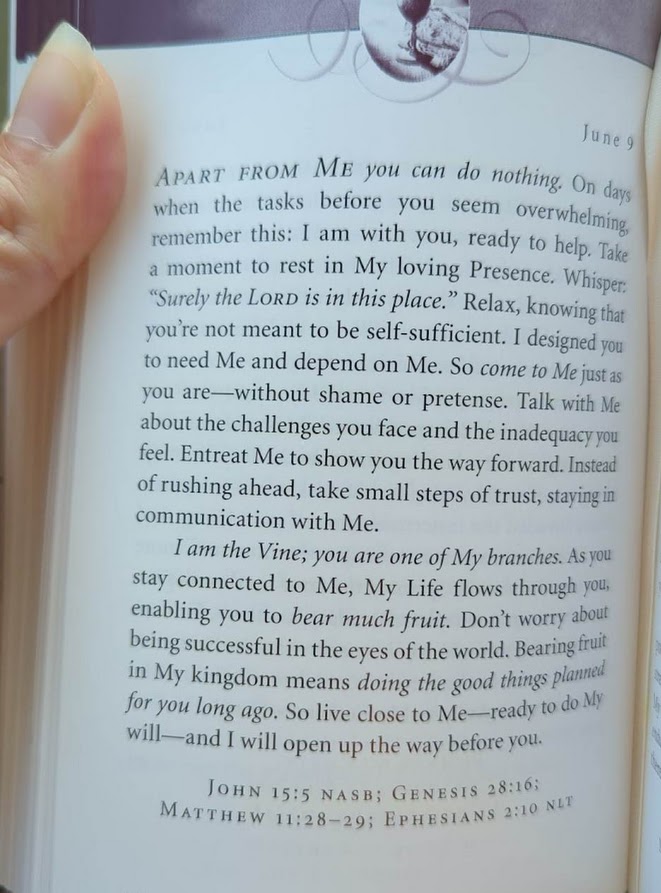
I looked over my editors notes last night, 6/08/2023, and the anxious thoughts of the edits were getting to me. This morning, 6/09, I did my morning devotional in my car before I went into work. This was what it was:

I read that first line and immediately recognized it as the one Julie Lessman sent me in 2021. I’m a Christian. I was honestly looking for hope that day. Waiting for a “right song at the right time” moment from the radio. Something I associated with my story. What I got was much more powerful.

Call it coincidence. Call it faith, but if that’s not a reason to keep hope alive, I don’t know what is.

Guilty of Fraud

Ever feel like a fraud? Like you’re somewhere you don’t belong? “Oh, all these people are so much smarter than me. I don’t fit in with them.” Or “I don’t have the experience that they all do. How could I help in this situation?” Or maybe “I haven’t work on my stories in months. I don’t deserve to be called a writer?” It gets to a point where you’re faking it. Faking a smile or faking your confidence just to hide how scared you are or how isolated you feel. People tell you: Fake it ’til you make it, but those feelings of fraud have a way of coming back.

Last week, I had the great opportunity to attend a Writing Day Workshop. When I signed up for it at the beginning of the year. I was stoked for it. I just reached a new “record low” for my novel’s wordcount and hired a professional editor to take a look at it (and he still is). My novel has never felt so close to being done and ready for publishing. I was super excited. I even paid for some time slots to be able to pitch my novel to a couple agents.

That was back in February. Fast forward to now, June. When it came time for the Writing Day Workshop, I was as anxious as a warthog in a new environment. I haven’t work on any of my novels since February. Between getting full time at my zoo and other stuff going on, the time to write either wasn’t there or I had no motivation to. It ate at me, but I’m guilty of not picking myself up from my bootstraps and just getting to work on writing. So, when the workshop came around, I felt like a fraud. Like I didn’t have a right to attend because I haven’t been writing or why should I bother pitching when I wasn’t prepared for it? I felt like a fraud and I feared it showed.

Good thing the workshop was expensive, because the reason of not letting that money go to waste kept me going.

My family helped me make sure I had all I needed to attend and I was able to work on my pitch during lunch at work. When the workshop started, those feelings of fraud began to go away. I took notes through the whole thing, contemplated a novel I was stuck on based on what the classes were saying. And, you know what? The inspiration came back. The drive to set new goals and practice finishing. I still had butterflies in my stomach when it came to the pitches, but I was feeling more encouraged by the end of the first day of workshops.

Then came the pitches. I used the pitches I thought up at lunch. It was a new take on my pitches before. I hadn’t had the chance to try it out on anyone, but I felt it better described my stories than my pitches in the past. I pitched two agents over Zoom and the technical issues spiked my anxieties. I ended up having to restart my computer for one of them and couldn’t have my notes up on a separate tab up for either of them. I felt like I was pitching blind, going off what wording I could remember, and hoping I didn’t look like a fool in the process.

Both agents invited me to query them my novel.

For those of you who don’t know, that’s huge. I got the literary agents interested. I’m in their special inbox of “I met that author at a conference, liked her idea, and I want to read more.” I could still get rejected. I could send them my query and both decide they don’t like the project. Yet, when you’ve been feeling like a fraud of a writer for the past couple of months and you get two agents interested while you’re in a panicked and anxious state, that’s a victory right there. That’s a renewal of hope that even though you’ve been out, you’re not down.

While I’m using this post to share my victory, I hope moving forward, you don’t let feelings of fraud keep you from your passions. It doesn’t matter if you’ve been out of it for a while, you can always dive back in. I’m going to do that with my writing. Try a little every day to get some progress whether its typing up an idea or writing a paragraph of story. There’s a lot of waiting in the getting published process and through that waiting, I need to be working on what’s next. Practice finishing my projects.

Whether you’re a writer or whether you’re chasing another dream. Please remember: you’re not a fraud.

Notes from #TENNWW

Hey everyone! I have the great opportunity to attend the online Tennessee Writing Workshop this weekend. I’m learning a lot and even have the chance to pitch to a couple literary agents (fingers crossed). With everything I’ve learned, I wanted to share a few things. Author E.J. Wenstrom gave a great class about busting writer’s block. I figured I’d share the ten questions you can ask when writer’s block attacks. These are all questions E.J. gave us in her class, and I’m definitely already utilizing them.

  1. What is the worst thing that can happen to your protagonist?
  2. What is the worst thing that can happen to your antagonist?
    Remember, your antagonist thinks they’re the hero of their story, so how can you up the stakes for them?
  3. What plot threads are in play?
    It can be helpful go back and read your work to see what little tidbits you put in that you forgot about. These tidbits could be something you can build on.
  4. What does your next plot decision say about your theme? What do you want to say about your theme? Do you even know your theme?
  5. What hints are in chapter 1?
    Is there something there you can use later on?
  6. How is the internal arc affected by external action?
    Sometimes we can get wrapped up in action, how is that affecting the growth of your character?
  7. What are your secondary characters doing?
    Every character is the hero of their own story. What are they up to?
  8. What elements of the setting can you activate?
    Treat the setting like a character. How does the setting participate? What challenges can it create?
  9. Who hasn’t been asked what they want?
    Every character wants something. What is it? If they haven’t revealed it yet, why haven’t they? Even minor characters have something to say.
  10. Have your characters been honest?
    Have they been honest with you? Themselves? Are you sure of your motivation? Who’s hiding something and why? Is what they want really going to make them happy?

Hope these questions help you conquer writer’s block! I know I’m probably going to need a new notebook to answer them all! Thanks for reading everyone!

Turn Off

Turn your mind off
Don’t think of what’s next
Don’t worry about tomorrow
Don’t look at that text

Just turn your mind off
Sit quietly for a moment
Hide away from the hustle
Free yourself from the torment

In a world full of “go”
It’s okay to be still
Let your mind rest
Renew your good will

Shut off the noise
And close your eyes
Let the world fade away
Take peace as your prize

A deep breath in
A deep breath out
Let slope your shoulders
Let go of all doubt

Take a moment to turn off
All the hustle, and bustle
Shut off the doubt and the dark
Over nothing you should puzzle

Remember to take care
Rest for a minute or two
Remember it’s okay
To yourself you must be true

It’s Okay to Say “No”

Do you know a “people pleaser” in your life? Maybe you are one? I’m certainly guilty of being one, and let me tell you:

It sucks.

As a people pleaser, you want people to like you. You don’t want to be viewed in a negative light. So, when someone asks you to do something for them, you say “yes.” You could have reservations about doing it. It could be far outside your comfort zone or even conflict with your plans, but you do it anyway because you don’t want to let anyone down. You want to be dependable, serving, or just plain helpful. Despite how you might feel about it.

Another thing that sucks about being a people pleaser is that some people will take advantage of you. “Oh, Nikki will do this for us, so let’s take it easy, go on this trip, etc.” They don’t consider that maybe you can’t do it. You don’t want to say “no” because then they’ll “be mad at you” if you don’t do it. You think they won’t like you anymore or you’re being selfish for not doing what they ask. But…

It’s okay to say “no.”

It is SO hard to say “no.” Take it from a people pleaser. The very thought of saying “no” stresses you out. It kills your fire and puts you on edge. I’ve had it ruin a beautiful sunrise morning as I drove to work because that’s all I could think about. Saying “no” to someone who asked me to do something for them. I started thinking of excuses. Good reasons as to why I couldn’t do what they asked. Something that would be justifiable and they couldn’t get mad at me for saying “no” because of it. The truth was that I was tired, a little burned out, and overwhelmed. I didn’t want to do what they asked because I needed a break. I needed time for me and with how busy my summer already is, I knew I wasn’t going to get that.

In the end, I told the truth. Then, I stressed about how the recipient thought of me. I don’t exactly trust people. I’ve seen too many two-faced individuals who will smile to your face then talk behind your back. Yet, regardless of how they took my “no.” I’m allowed to care for myself.

So, to all the people pleasers out there, it’s okay to say “no.” You’re not required to say “yes” every time someone asks you to do something. You’re allowed to do what’s best for you, and you shouldn’t feel guilty about it.

Bare Minimum

Ever have a day where it could be better? You get out of bed, go to work and you find yourself doing the bare minimum to get by?

I had a day like that last week. The morning starts out normal. Get up, get dressed, drive to work, and hope for a good, productive day. Yet, when work started, things felt against me. I’m a zookeeper, and that day I was tasked to care for our cheetah and tortoise buildings as well as check in on our aviary keeper who’s training. We only have one cheetah so it’s not a hard building. I could knock it out in less than an hour, but I’m in love with cheetahs. My goal is to build relationships with them, maybe even go to a cheetah breeding facility someday. But, for our now, with our cheetah, I just want him to know he can trust me.

Sadly, our cheetah was a terrible mood that morning. He challenged me at every turn. We work protective contact with our cheetah, but that doesn’t mean he won’t swipe at the mesh to get me to flinch. Or hiss when I passed over his morning meal. I held my ground, but it was discouraging to see him acting that way. I thought we were making progress together.

After that, it started raining, and it rained all day. My area is mostly outside, so I got pretty wet. Normally, when I do these routines, I can knock them out, but that day, I fell behind. The disinfecting ended up being the tort barn and that’s most challenging out of all of them. There’s no way to get it perfectly clean, and while you’re trying to clean, the torts walks through it and leave a trail of mud in their wake. Cleaning the barn will never be perfect, but we do what we can. It took me most of the morning to get that barn clean, and periodically, I had to pause my routine to check in with the aviary.

Something that bugged me that day was that I knew I was on my own. We were short staffed and had people training in certain areas. I didn’t need the help. I got it all done, but knowing there’s people ready to back you up grants a certain peace of mind.

I even forgot things for that day. When you’re an animal caretaker, and you forget something, it makes you feel terrible, because it usually effects the animals. That day, it was going to drop below 50 overnight and it escaped my mind that the torts would need to come in since it was too cold for them. Thankfully, I had teammates reminding me, but it was just another thing to gripe at me. Getting the torts in took a while. They’re 400lbs+ so you have to coax them and be patient. Safe to say, if I was soaked already, I was soaked after getting the last tortoise in.

Have you ever gotten help from someone and it makes you feel like you don’t know what you’re doing, or that they kinda took over what you were doing? That happened that day as well.

So, what do you do when your day just isn’t going for you? When all you can do is the bare minimum and not accomplish your tasks? Unfortunately, those days happen and there isn’t anything that can be done about them. What you can do, though, is control your outlook on them. One bad day doesn’t spoil your accomplishments. One interaction doesn’t define who you are to someone. Days like that happen. What you can do is keep your head up and look forward to tomorrow. Keep focusing on the positive. Make the best of everyday. You got this.